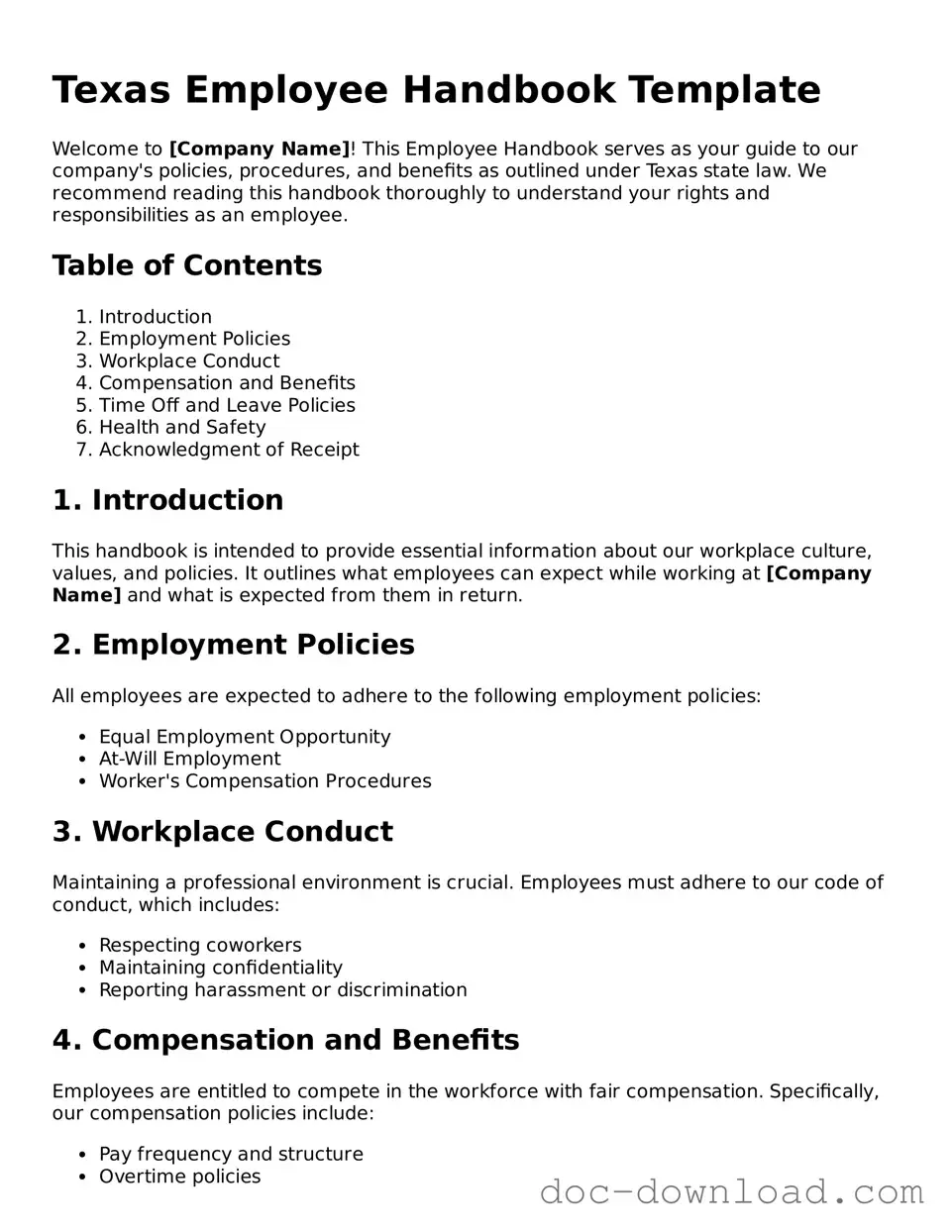
Blank Employee Handbook Document for Texas
Creating a comprehensive Texas Employee Handbook is essential for any organization aiming to foster a positive workplace culture while ensuring compliance with state laws. This vital document serves multiple purposes, including outlining company policies, employee rights, and responsibilities. It typically covers key areas such as workplace conduct, attendance expectations, and disciplinary procedures. Additionally, the handbook often addresses benefits, including health insurance, vacation time, and leave policies, which are crucial for employee satisfaction and retention. By clearly communicating these aspects, employers can mitigate misunderstandings and set clear expectations for behavior and performance. Furthermore, the handbook can serve as a reference point for employees, helping them navigate their roles and the resources available to them. Given the diverse nature of Texas's workforce, tailoring the handbook to reflect the specific needs and culture of the organization is not just beneficial but necessary for fostering a harmonious workplace environment.
Similar forms
The Texas Employee Handbook form shares similarities with the Employee Manual, which serves as a comprehensive guide for employees regarding company policies, procedures, and expectations. Both documents aim to communicate the organization's culture and standards. They outline the rights and responsibilities of employees while providing essential information about benefits, workplace conduct, and disciplinary actions. The Employee Manual often includes detailed sections on topics such as harassment, attendance, and leave policies, mirroring the structure and intent of the Texas Employee Handbook.
Another document akin to the Texas Employee Handbook is the Workplace Safety Policy. This document focuses specifically on the safety protocols and procedures that employees must follow to ensure a safe working environment. Like the Employee Handbook, the Workplace Safety Policy emphasizes the employer's commitment to employee well-being and outlines the responsibilities of both the employer and employees. It includes guidelines for reporting hazards, emergency procedures, and safety training, reinforcing the overarching theme of maintaining a safe workplace.
To understand the complexities of property transfer, it's also valuable to explore related legal documents such as the Quitclaim Deed in Indiana, which allows a property owner to transfer their interest without guaranteeing the title's validity. For more information, you can visit https://quitclaimdeedtemplate.com/indiana-quitclaim-deed-template/.
The Texas Employee Handbook is also similar to the Code of Conduct, which establishes the ethical framework within which employees are expected to operate. This document details acceptable behaviors, conflict of interest policies, and the consequences of misconduct. It complements the Employee Handbook by providing specific guidance on professional conduct and ethical decision-making. Both documents work together to create a cohesive understanding of the organization’s values and expectations for employee behavior.
Lastly, the Onboarding Packet bears resemblance to the Texas Employee Handbook as it serves as an introduction for new hires. This document typically includes essential information about the company, its mission, and the specific roles of employees. It may also incorporate elements from the Employee Handbook, such as key policies and procedures that new employees need to understand right away. The Onboarding Packet aims to facilitate a smooth transition into the workplace, ensuring that new employees are informed and prepared to engage with their roles effectively.
Document Overview
| Fact Name | Description |
|---|---|
| Purpose | The Texas Employee Handbook serves as a guide for employees, outlining company policies, procedures, and expectations. |
| Governing Law | This handbook is governed by Texas labor laws, including the Texas Workforce Commission regulations. |
| Contents | Typically, the handbook includes sections on workplace conduct, benefits, and grievance procedures. |
| Employee Acknowledgment | Employees are often required to sign an acknowledgment form to confirm they have received and understood the handbook. |
| Updates | Employers should regularly review and update the handbook to reflect changes in laws or company policies. |
Additional State-specific Employee Handbook Forms
California Employee Handbook Template - The form acts as a useful reference point for future discussions on workplace policies.
Innewhire - The handbook clarifies the consequences of policy violations.
To ensure compliance and avoid potential penalties, it is advisable to consult resources such as californiapdffoms.com for guidance on filling out the California LLC 12 Form accurately and efficiently.
Arizona Employee Handbook - The Employee Handbook outlines company expectations and benefits.
Writing an Employee Handbook - The guidelines for employee training and orientation are outlined here.
Sample - Texas Employee Handbook Form
Texas Employee Handbook Template
Welcome to [Company Name]! This Employee Handbook serves as your guide to our company's policies, procedures, and benefits as outlined under Texas state law. We recommend reading this handbook thoroughly to understand your rights and responsibilities as an employee.
Table of Contents
- Introduction
- Employment Policies
- Workplace Conduct
- Compensation and Benefits
- Time Off and Leave Policies
- Health and Safety
- Acknowledgment of Receipt
1. Introduction
This handbook is intended to provide essential information about our workplace culture, values, and policies. It outlines what employees can expect while working at [Company Name] and what is expected from them in return.
2. Employment Policies
All employees are expected to adhere to the following employment policies:
- Equal Employment Opportunity
- At-Will Employment
- Worker's Compensation Procedures
3. Workplace Conduct
Maintaining a professional environment is crucial. Employees must adhere to our code of conduct, which includes:
- Respecting coworkers
- Maintaining confidentiality
- Reporting harassment or discrimination
4. Compensation and Benefits
Employees are entitled to compete in the workforce with fair compensation. Specifically, our compensation policies include:
- Pay frequency and structure
- Overtime policies
- Health insurance options
- Retirement savings plans
5. Time Off and Leave Policies
We believe in the importance of work-life balance. Our time off policies encompass:
- Paid Time Off (PTO)
- Sick leave
- Parental leave
- Other leave options
6. Health and Safety
Your safety is our priority. Employees must follow health and safety guidelines which include:
- Reporting unsafe conditions
- Using personal protective equipment (PPE) when necessary
- Participating in Safety Training sessions
7. Acknowledgment of Receipt
By signing below, you acknowledge that you have received and read the Employee Handbook. You agree to comply with the policies and guidelines outlined herein.
Employee Name: [Employee Name]
Employee Signature: [Employee Signature]
Date: [Date]